Retrieval-Augmented Generation (RAG) has emerged as one of the most powerful strategies for enhancing Large Language Models (LLMs).
By combining knowledge retrieval with generative reasoning, RAG systems reduce hallucinations, improve accuracy, and provide domain-specific intelligence that static models cannot match.
Since its introduction in 2020, RAG has evolved rapidly.
In 2025, we are witnessing a surge of innovation:
- Microsoft’s GraphRAG for structured reasoning,
- MiniRAG for resource-constrained deployments,
- VideoRAG for multimodal retrieval, and
- Agentic RAG that merges retrieval with autonomous agents.
Alongside these research advances, enterprise deployment practices and evaluation benchmarks have matured, making RAG central to production-grade AI systems.
RAG is evolving from a promising technique to an enterprise necessity—and simultaneously encountering new limitations. Include a recent perspective:
"RAG is no longer just an enhancement for AI chatbots – it’s the strategic backbone of enterprise knowledge management and knowledge access. As AI moves from novelty to necessity, RAG offers a repeatable, scalable way to bring intelligence to the point of work, for example by streamlining investment analysis." Squirro
Also mention the critical role of document management (DM) in enabling effective RAG deployment:
"RAG deliver the most value when paired with a robust document management system. In fact, RAG is at its most powerful when layered with metadata search, giving users a precise way to drill into their organization’s information space"TechRadar
This article explores the cutting-edge research, frameworks, benchmarks, and industry use cases that define the RAG landscape today.
What is Retrieval-Augmented Generation (RAG)?
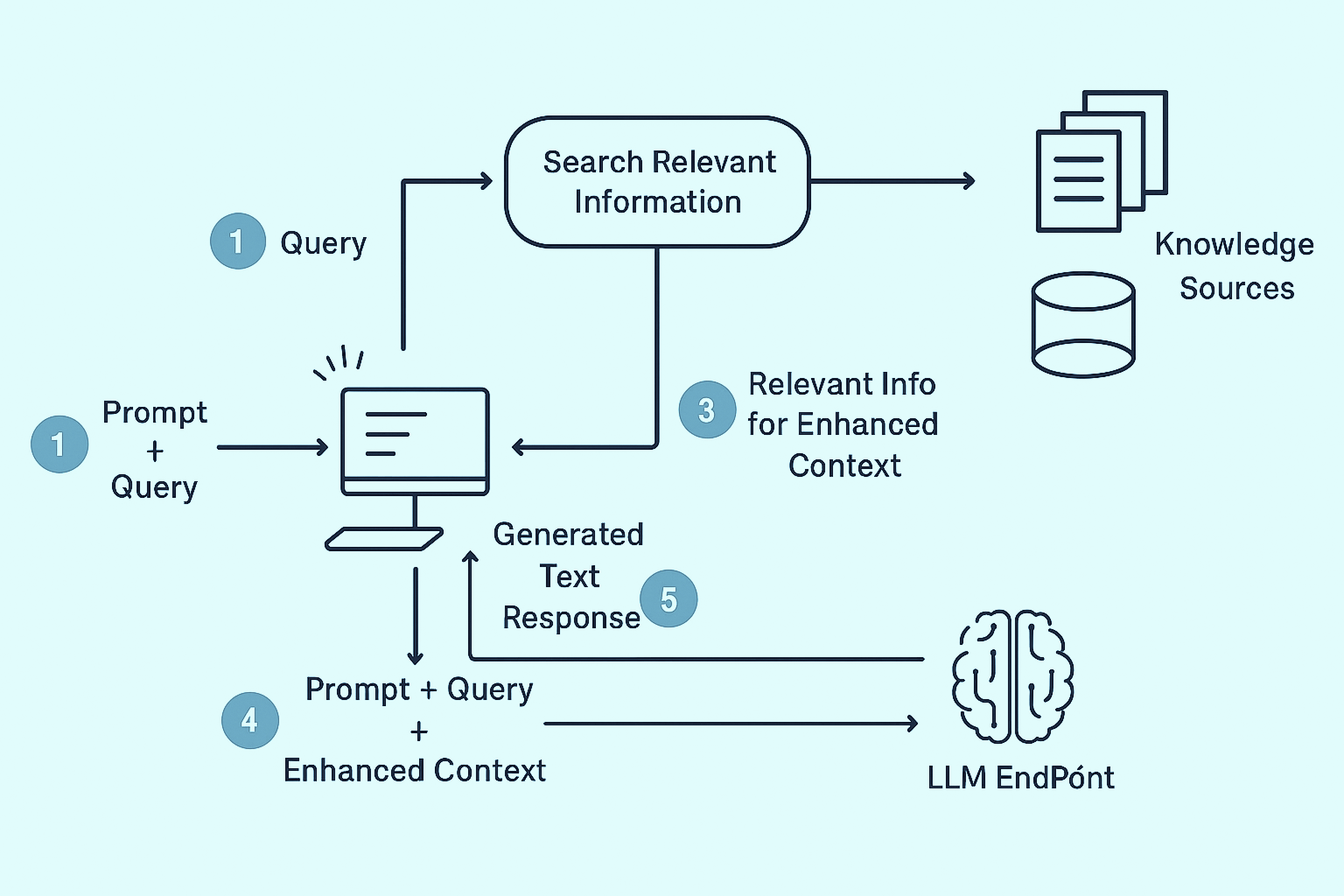
At its core, RAG enhances generative models with external knowledge.
Instead of relying solely on pretrained parameters, a RAG system retrieves relevant documents, passages, or data from external sources, and injects them into the LLM’s context window before generating an answer.
This approach addresses three major limitations of standalone LLMs:
- Accuracy: Reduces hallucinations by grounding outputs in retrieved evidence.
- Freshness: Incorporates the latest domain-specific or real-time data.
- Explainability: Provides traceable sources that increase trust.
As the ACL Anthology paper Searching for Best Practices in Retrieval-Augmented Generation highlights,
“RAG is not a single method but a design space of architectures and retrieval strategies” that can be optimized for diverse tasks.
The Latest Research in RAG (2024–2025)
GraphRAG: Knowledge Graph Integration
Developed by Microsoft Research, GraphRAG weaves knowledge graphs directly into retrieval pipelines, enabling LLMs to connect relationships, not just retrieve facts.
This structured reasoning makes it especially powerful for domains that demand complex inference, such as scientific discovery, regulatory compliance, and fraud detection.
MiniRAG: Small Model Optimization
MiniRAG adapts retrieval augmentation for Small Language Models (SLMs), delivering efficient pipelines that thrive in low-resource environments.
By bringing RAG to edge devices, IoT systems, and embedded applications, it unlocks AI capabilities beyond the cloud, where lightweight intelligence matters most.
VideoRAG: Multimodal Retrieval
VideoRAG pushes RAG into the multimodal era, combining visual embeddings and textual metadata to retrieve relevant video segments on demand.
This makes it a game-changer for video-based learning platforms, surveillance analytics, and personalized media search engines.
SafeRAG: Security Benchmarking
As enterprises deploy RAG in sensitive settings, SafeRAG emerges as a security stress test for retrieval pipelines.
It benchmarks resilience against data leakage, prompt injection, and adversarial manipulation, helping organizations build AI systems that are not only intelligent, but also trustworthy and secure.
Agentic RAG: Autonomous Reasoning
Agentic RAG introduces agents that leverage retrieval as part of multi-step workflows.
This paradigm enables dynamic decision-making, valuable in enterprise automation, legal reasoning, and multi-hop question answering.
Leading Frameworks for RAG Implementation
Several open-source frameworks dominate RAG development in 2025:
- LangChain: The most comprehensive ecosystem, offering LangSmith for debugging and a rich set of tutorials.
- LlamaIndex: Specializes in connecting LLMs to structured and private data sources, with over 300 integration packages.
- Haystack: End-to-end orchestration with modular pipelines and a visual pipeline builder for enterprise teams.
- LightRAG: A lightweight, high-performance implementation designed for speed.
For beginners, Hugging Face’s “RAG from scratch” tutorial offers an excellent starting point, while Zen van Riel’s advanced guide provides deep insights into architecture and production deployment.
Deploying RAG in Production
Enterprise deployments of RAG require more than just plugging in a vector database. Best practices include:
- Vector Databases: Choosing the right solution is critical. Options include Pinecone (enterprise cloud), Weaviate (open-source), Milvus (high-performance, scalable), and pgvector (PostgreSQL extension).
- Scalability: Distributed deployments with GPU acceleration and Kubernetes orchestration (as documented by Coralogix).
- Security & Privacy: Implementing zero-trust architectures, encryption, and data anonymization for compliance in healthcare, finance, and legal sectors.
As AWS Prescriptive Guidance notes:
“the right database and deployment strategy can make the difference between a proof-of-concept and a production-ready RAG system.”
Evaluating RAG Systems
Benchmarking is now an established discipline in RAG research:
- RAGEval: Automatically generates evaluation datasets for domain-specific testing.
- RAGBench: A large-scale benchmark with 100k examples across five industries.
- BenchmarkQED: Microsoft’s automated suite for stress-testing retrieval pipelines.
These frameworks allow researchers and enterprises to validate RAG systems not only on accuracy, but also on robustness, latency, and security.
Industry Applications of RAG
RAG is transforming multiple industries:
- Healthcare: Clinical decision support systems show up to a 30% reduction in misdiagnoses with RAG-powered retrieval of medical literature.
- Legal: Firms use RAG for rapid contract review and due diligence in mergers and acquisitions.
- Manufacturing: RAG aids in compliance checks, predictive maintenance, and factory process optimization.
- Retail: Enables personalized recommendations and AI-powered customer support grounded in real product catalogs.
These success stories demonstrate RAG’s value not only in research but also in enterprise impact.
RAG as the New Standard for Enterprise AI
RAG has evolved from a research prototype into a cornerstone of enterprise AI.
The breakthroughs of 2025, from GraphRAG to Agentic RAG, demonstrate that retrieval augmentation is no longer optional, but essential for accurate, secure, and scalable AI systems.
For businesses, the opportunity lies not only in adopting RAG but in choosing the right frameworks, vector databases, and deployment strategies.
As the ecosystem matures, organizations that integrate RAG effectively will set the standard for intelligent, trustworthy AI applications.